Building a Stronger Local Economy: Key Takeaways from the NEF, Proudly SA, and SAYTA Webinar

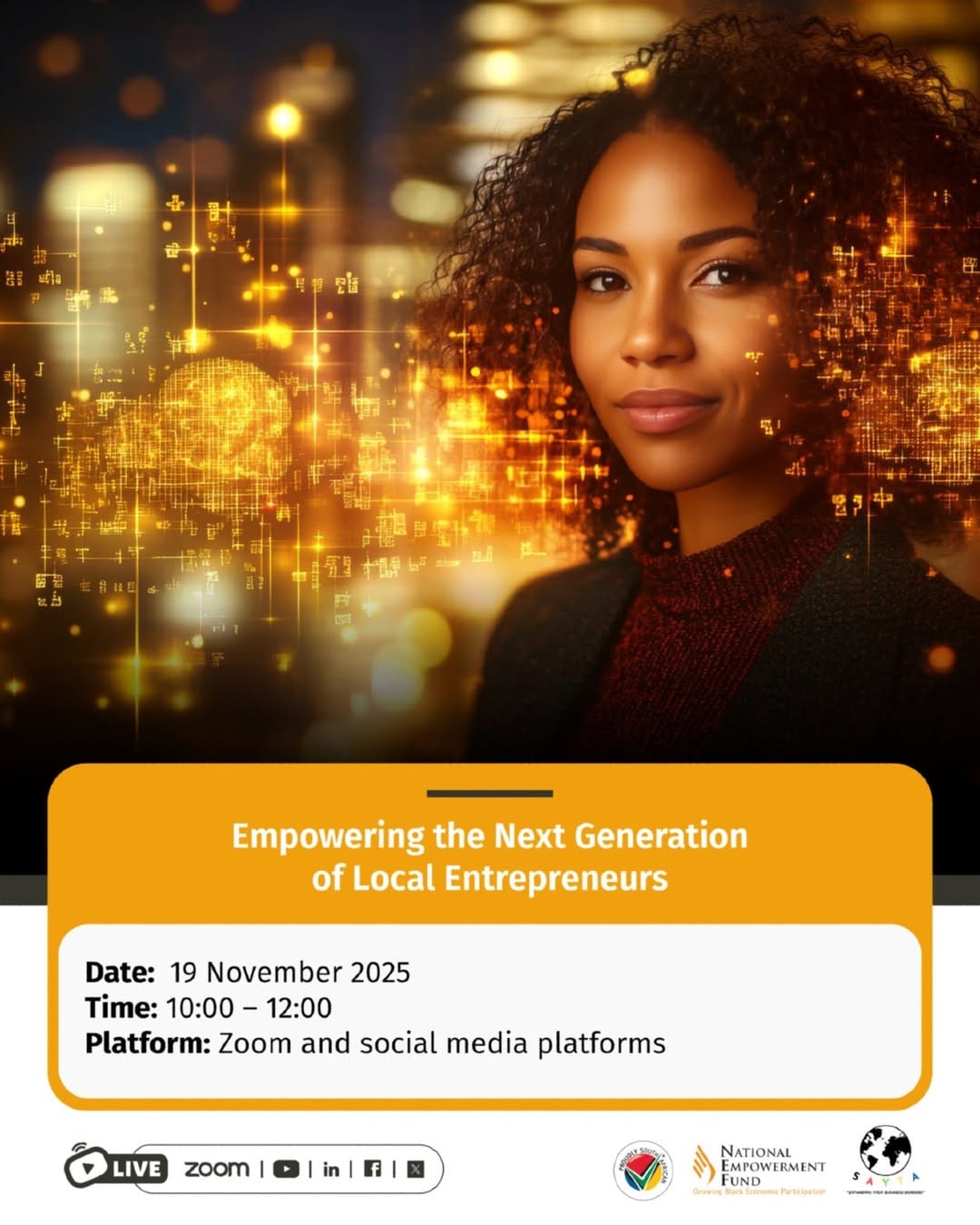
South Africa’s journey towards inclusive economic growth took centre stage during the webinar hosted by the National Empowerment Fund (NEF), Proudly South African and the South African Youth Trade Association (SAYTA). The discussion brought together leaders from development finance, industry, youth trade and the private sector to unpack how localization, entrepreneurship and collaboration can drive job creation and long-term economic resilience.
The Strategic Rationale for Local Procurement 🚀
Proudly South African Chief Marketing Officer, Happy MaKhumalo Ngidi kicked off the webinar by outlining the position of the buy-local imperative as a global strategy rooted in Nelson Mandela's vision and resonant with contemporary efforts to mitigate unemployment, inequality and poverty.
As a membership-driven entity, Proudly South African grants qualifying businesses its proprietary trademark, alongside preferential market access. Such mechanisms are critical for micro, small and medium enterprises (MSMEs).
Entrepreneurial Scaling with Employment Focus 🧰
SAYTA President Luyolo Dwesi also advocated for a paradigm shift, youth entrepreneurship must prioritize scalable models that generate sustainable employment. This orientation is imperative for transformative impact, aligning with national goals under the MSME Amendment Act to foster high-growth youth enterprises.
This is centred around SAYTA's critical posture for the economic advancement of youth through trade-led entrepreneurship and market access. The organization positions youth not only as beneficiaries of development programmes but as active contributors to industrial growth, value chain participation and regional trade. Its philosophy is grounded in the belief that youth entrepreneurship must be commercially viable, policy-aligned and integrated into formal economic systems to achieve lasting impact.
NEF's Role in Black Economic Empowerment 🏦
NEF Divisional Executive in Venture Capital & Corporate Finance, Joel Mphela articulated the fund's dual mandate as financier and thought leader in black economic participation. The NEF stands as a cornerstone institution for advancing black economic empowerment in South Africa. It exists to address historical inequalities in access to capital, ownership and participation in the economy. The Institution is anchored in the principle that meaningful transformation requires both financial inclusion and strategic economic participation across high-impact sectors.
To operationalise this vision, NEF deploys developmental finance alongside structured non-financial support to strengthen black-owned and black-controlled enterprises. Its interventions are designed to catalyse sustainable businesses, expand industrial participation and build long-term asset ownership. In doing so, NEF contributes to structural transformation while supporting enterprises that drive employment and sectoral growth.
Navigating the Green Economy Transition 💹
Viaksha Mohabir of the German Development Corporation analyzed South Africa's pivot from coal dependency. As the country shifts there is a need for deliberate investment in skills development and training, while also leveraging local raw materials to manufacture the equipment required for the green economy. This approach ensures that the transition creates local value rather than deepening dependency.
GIZ stands for international development cooperation which promotes sustainable economic development, social inclusion and environmental stewardship. In the South African context, the organization supports systemic reforms that enable a just transition toward a low-carbon economy ensuring that economic restructuring does not deepen inequality or exclude vulnerable groups.
Private Sector Strategies for Operational Resilience 💼
Twizza Chief Human Resources Officer Tenielle Johns emphasized the importance of vertical integration, particularly in fostering control over production lines as a pathway to sustainability and community impact. This operational discipline underpins job-intensive growth models endorsed by recent regulatory reforms.
Twizza is known for locally driven industrialization that balances commercial success with social responsibility. As a proudly South African manufacturer the company champions domestic production, local sourcing and inclusive employment practices. Its operating model reflects a commitment to building resilient businesses that contribute meaningfully to the communities in which they operate.
Policy-Aligned Pathways Forward 🛣️
Entrepreneurship undergirds economic vitality yet demands orchestrated action. By prioritizing local procurement, ecosystem partnerships, youth financing, market facilitation and skills development bolstered by intentional policy reform, progress start to take form in addressing the many socio-economic challenges that currently plague South African communities.
These were the sentiments that were shared by webinar, to recap on more information shared during the program, click the link below.
Until next time!!!